Types of Knives: A Complete Guide to Blade Shapes and Uses
There are a few hundred named knife shapes in the world, and most of the differences come down to three things: how long the blade is, where the point sits relative to the spine, and how much belly the edge carries. Everything else is handle material and decoration.
This guide covers the shapes we make, what each one is actually for, and how to tell which one you need. It is written for someone buying their first serious knife as much as for a collector filling a gap.
Fixed blade or folding?
This is the first decision and it matters more than the shape.
A fixed blade is one piece of steel running the full length of the handle. There is no pivot to work loose, no lock to fail, and nothing to clean out when it fills with blood or sawdust. It is stronger than any folder of the same size, and it is ready the moment you draw it. The cost is that it needs a sheath and it is harder to carry discreetly.
A folding knife closes into its own handle. It fits in a pocket, it carries without a sheath, and a 4-inch blade folds down to something you forget is there. The trade is strength: the pivot and the lock are the weak points, and a folder should not be used for prying or batoning no matter how well made it is.
For hunting, bushcraft and camp work, buy a fixed blade. For everyday carry, buy a folder. Most people who do both end up owning one of each rather than one knife that compromises on both.
Hunting knives
A hunting knife is judged on one job: breaking down an animal in the field, usually in poor light with cold hands.
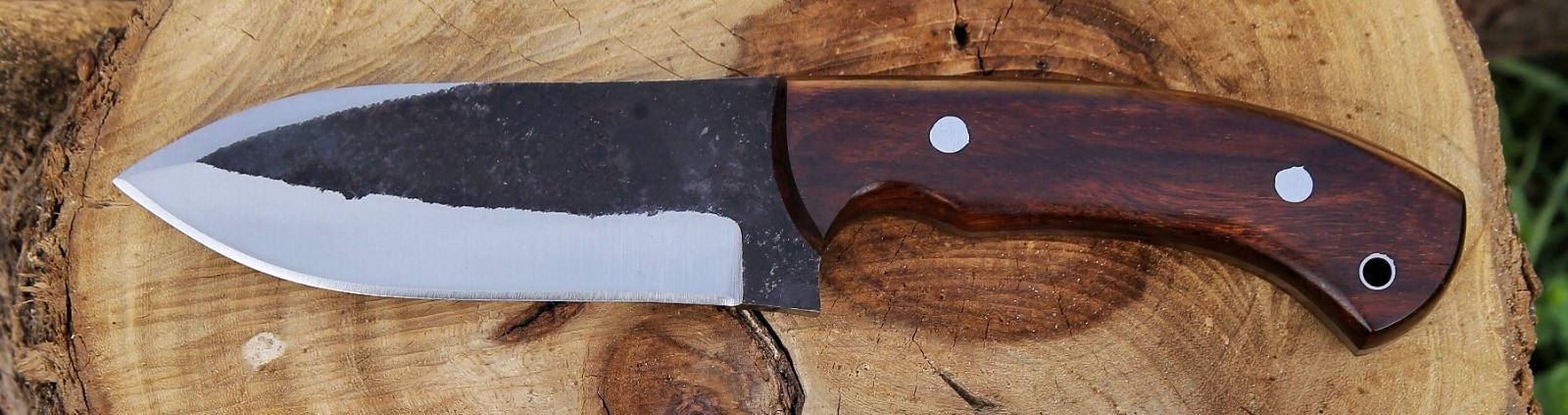
Blade lengths sit between about 3.5 and 5 inches. Longer than that and you lose control for the fine work around joints; shorter and you are fighting the carcass. The profile is usually a drop point, where the spine curves gently down to meet the edge. That keeps the tip low and out of the way, which matters when you are opening a body cavity and do not want to puncture what is inside it.
Full tang is not negotiable here. The steel should run the entire length of the handle, because a hunting knife gets used against bone and joints, and a partial tang works loose eventually.
Skinning knives
A skinner is a hunting knife that has given up everything for one task.
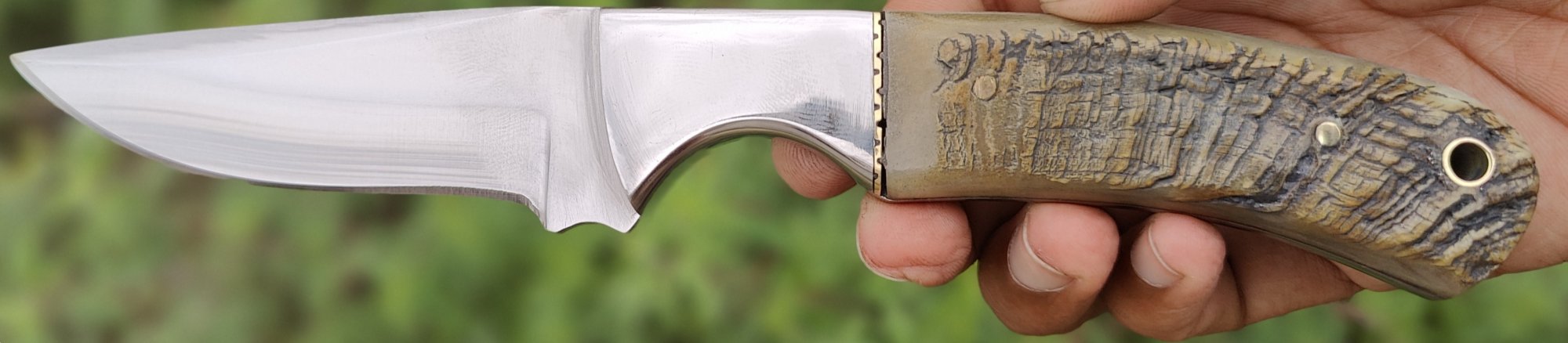
The blade is short, usually under 4 inches. The belly, meaning the curved part of the edge, is deep and sweeping. The point is pulled back and kept out of the way. This is all so the curved edge can run along under the hide and separate it without the tip catching and cutting through.
Some carry a gut hook on the spine: a small sharpened notch for opening the belly without pushing the point in. It works well for that and is useless for anything else.
A skinner is a second knife, not a first one. It pairs with a hunting knife rather than replacing it.
Bushcraft knives
Bushcraft is woodwork with a knife, so a bushcraft blade is built differently from a hunting one.
The spine is thick, usually 4mm or more, because the knife will be batoned, meaning struck through a log with a piece of wood to split it. The grind is often scandi, a single flat bevel running from the edge to partway up the blade, which bites into wood and is easy to sharpen flat on a stone in the field.
The spine is usually left square and sharp at the corner, so it can throw sparks off a ferro rod. That detail gets overlooked and it matters if you are lighting fires.
Blade length is typically 4 to 5 inches. A bushcraft knife is a tool for making other tools: feather sticks, pot hangers, tent pegs, traps.
Bowie knives
The bowie is a large fighting and camp knife, and the name covers a family rather than one shape.
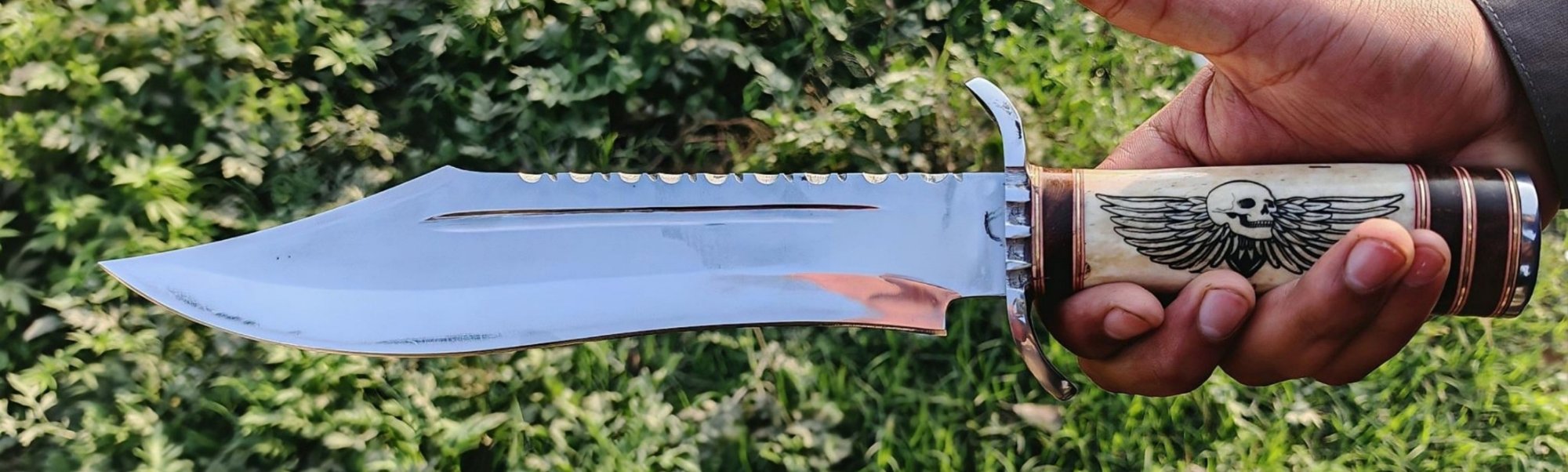
What makes it a bowie is the clip point: the spine runs straight and then the last third is cut away, clipped, to bring the tip down and make it finer. That gives you a long cutting edge with a point sharp enough for detail work. Many have a guard, and many carry a fuller down the blade to take weight out without losing strength.
Blade lengths usually sit between 8 and 10 inches. At that size it is as much a chopper as a knife: it will split kindling, clear brush and break down a carcass, and it is heavy enough to be awkward for anything small.
Most bowies today are bought for display and collecting. That is not a criticism; a well-made one is an object worth looking at, and a 10-inch blade is more knife than most people need in a day.
Tanto knives
The tanto point is a Japanese shape, though the Western version is its own thing.
Instead of curving to a point, the edge runs straight and then turns at a sharp angle to form the tip. That puts a lot of steel directly behind the point, which is the part of any blade most likely to break. A tanto will pierce and pry where a thinner tip would roll or snap.
The trade is the belly. A straight edge with an angled tip does not slice or skin well, because there is no curve to roll through the cut. A tanto is for puncturing, cutting webbing and cardboard, and work that would damage a finer point.
It is a working and tactical shape rather than an outdoor one.
Folding and pocket knives
A folder lives or dies on its lock and its pivot.
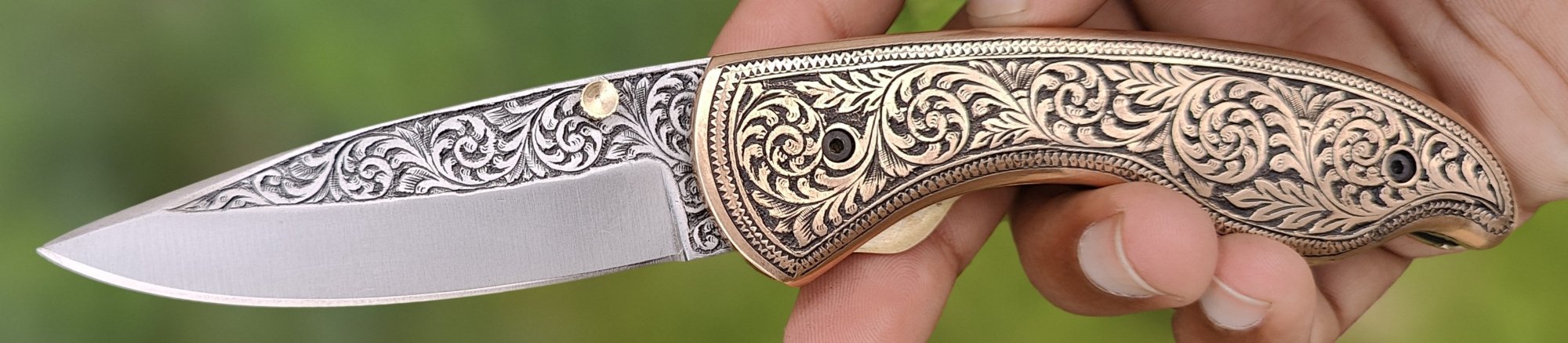
The traditional pattern is the lockback: a bar running along the spine drops into a notch on the blade and holds it open, released by pressing the back of the handle. It is strong, it is simple, and it has been made the same way for two centuries.
Liner locks and frame locks use a sprung piece of the handle that moves behind the blade. They are quicker to close one-handed. Slipjoints have no lock at all, just a spring holding the blade open, which is why they are legal to carry in places where locking knives are not.
Blade lengths run from about 2.5 to 4 inches. Handle materials matter more on a folder than anywhere else, because you handle it every day: wood and bone look best, micarta and G10 grip best when wet.
Check your local law before buying. Blade length limits and lock restrictions vary by country and by state, and they apply to carrying rather than owning.
Chef knives
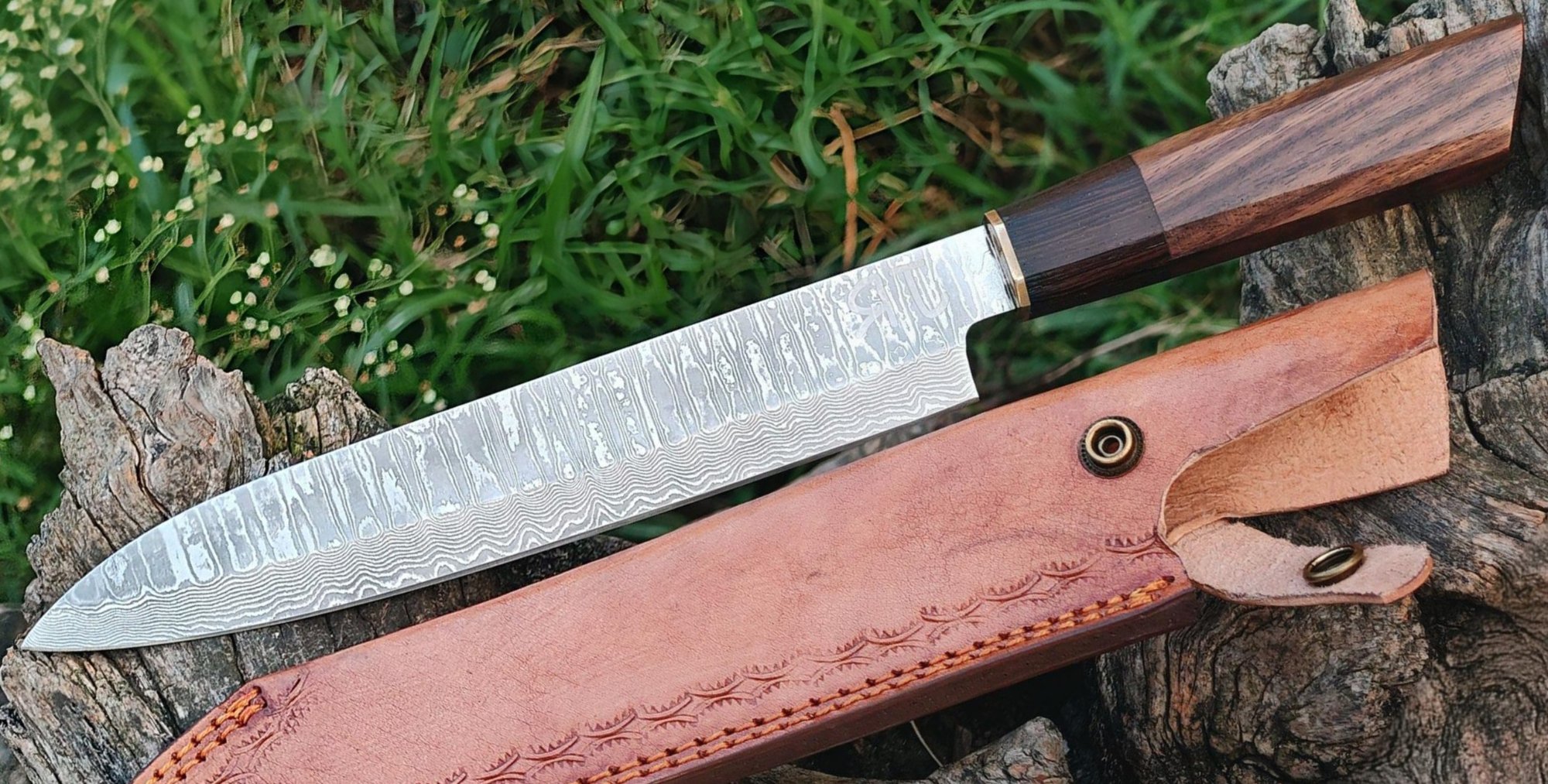
The chef knife is the one that gets picked up for almost everything, and if you buy one kitchen knife it should be this.
Blade lengths run from 8 to 10 inches. The edge curves gently from heel to tip, which is what lets you rock the blade through herbs and onions rather than lifting it for every cut. The heel, the part nearest the handle, is where the weight is, and that is what does the work on carrots and squash.
Balance matters more than sharpness, because you can sharpen any knife. A chef knife should feel like the weight sits where your hand is, not out at the tip.
The Japanese equivalents are the gyuto and the santoku. A gyuto is a chef knife by another name, usually a little thinner and harder. A santoku is shorter and flatter with less curve, so it chops straight down rather than rocking.
Kiritsuke
The kiritsuke is traditionally the knife a head chef carried, and in a Japanese kitchen it was a rank as much as a tool.
The blade is long and straight with an angled tip, something between a chef knife and a sword. It slices fish and vegetables in a single pulling motion rather than rocking, and the flat edge means it cuts cleanly all the way through without leaving the last thread attached.
It takes practice. A kiritsuke punishes a sloppy grip in a way a chef knife does not, which is part of why it carried that status.
Cleavers
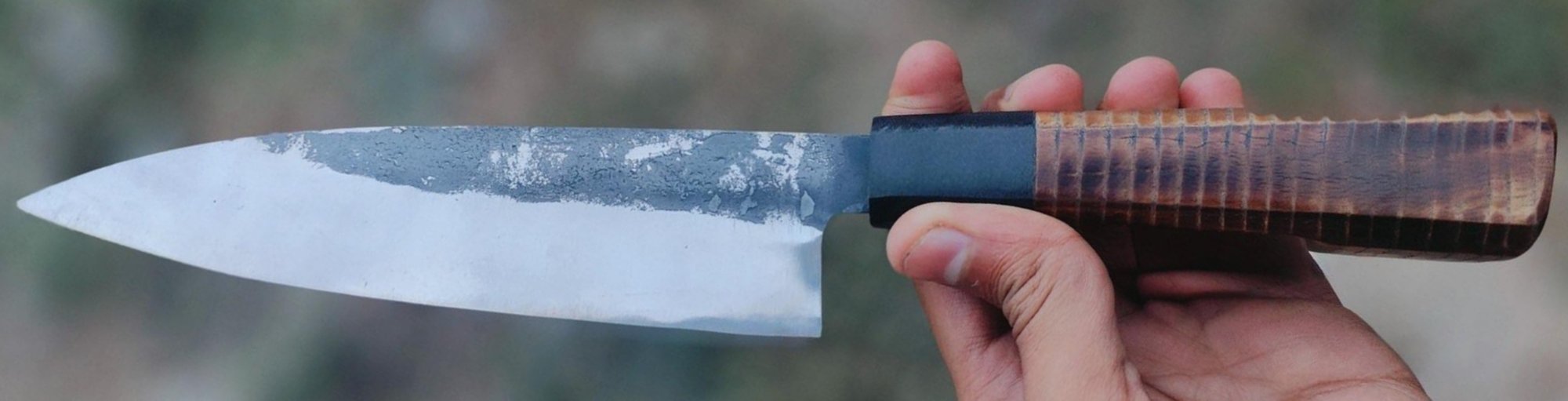
A cleaver works through weight rather than sharpness.
The blade is thick through the spine and heavy, and the job is to fall where you aim it. It will go through poultry joints, small bones and dense squash that would chip a chef knife. The broad face doubles as a scoop for moving chopped food off the board.
Two different knives share the name. A butcher's cleaver is thick and blunt-shouldered, built for bone. A Chinese vegetable cleaver, sometimes called a caidao, is much thinner and is actually a chef knife in a rectangular shape, used for slicing rather than chopping. They are not interchangeable, and buying the wrong one is a common mistake.
Neck knives
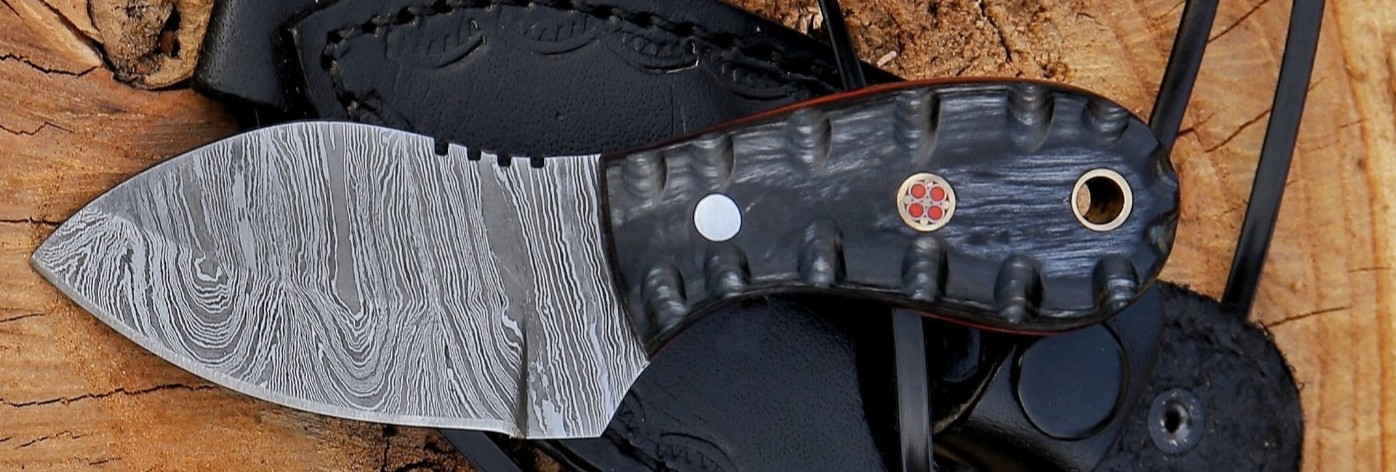
A neck knife is a small fixed blade worn on a cord, sitting against the chest under a shirt.
Blades are usually 2 to 3 inches. The point is that it is a fixed blade you can carry without a belt sheath: nothing to open, nothing to unlock, and it is there when your hands are full or wet. They suit camping, fishing, and the kind of everyday cutting a folder does slowly.
The sheath matters more than the knife. It has to hold the blade securely enough that bending over does not drop it, and release cleanly enough to be worth carrying.
A word on steel
Blade steel matters, but not as much as the arguments about it suggest. Shape and heat treatment decide more than the name stamped on the bar.
High carbon steels like 1095 take a very hard edge and are easy to sharpen. They also rust if you look at them wrong, so they need drying and oiling after use. Damascus is usually built from high carbon steels, which is why a Damascus blade needs the same care.
Stainless steels like 12Cr, 440C, D2 and J2 give up a little edge hardness in exchange for not rusting. For a kitchen knife or a blade that lives in a pack, that trade is usually worth making.
Stainless Damascus exists and is the middle ground: the layered pattern, with far better corrosion resistance than carbon Damascus.
One thing worth knowing as a buyer: some blades carry a Damascus-looking pattern that was acid etched onto plain steel. That pattern is on the surface and wears off with sharpening. A real Damascus pattern runs through the metal, because it is made of layers. If a seller does not say which it is, ask.
How to choose
Start with what you will actually do with it, not with the shape you like the look of.
If you hunt, buy a drop point hunting knife in 4 inches, full tang, with a leather sheath. Add a skinner later if you process enough animals to want one.
If you camp and work with wood, buy a bushcraft knife with a thick spine and a square spine corner for a ferro rod.
If you want something in your pocket every day, buy a folder between 3 and 3.5 inches, and check your local law on lock types and blade length first.
If you cook, buy one good chef knife before you buy a set. A set is a better gift than it is a first purchase, because most people use the chef knife for ninety percent of the work and the rest sit in the block.
If you are buying to display or collect, the rules change: buy the piece you want to look at. A bowie or a Damascus blade on a wall is doing its job.